🏷️
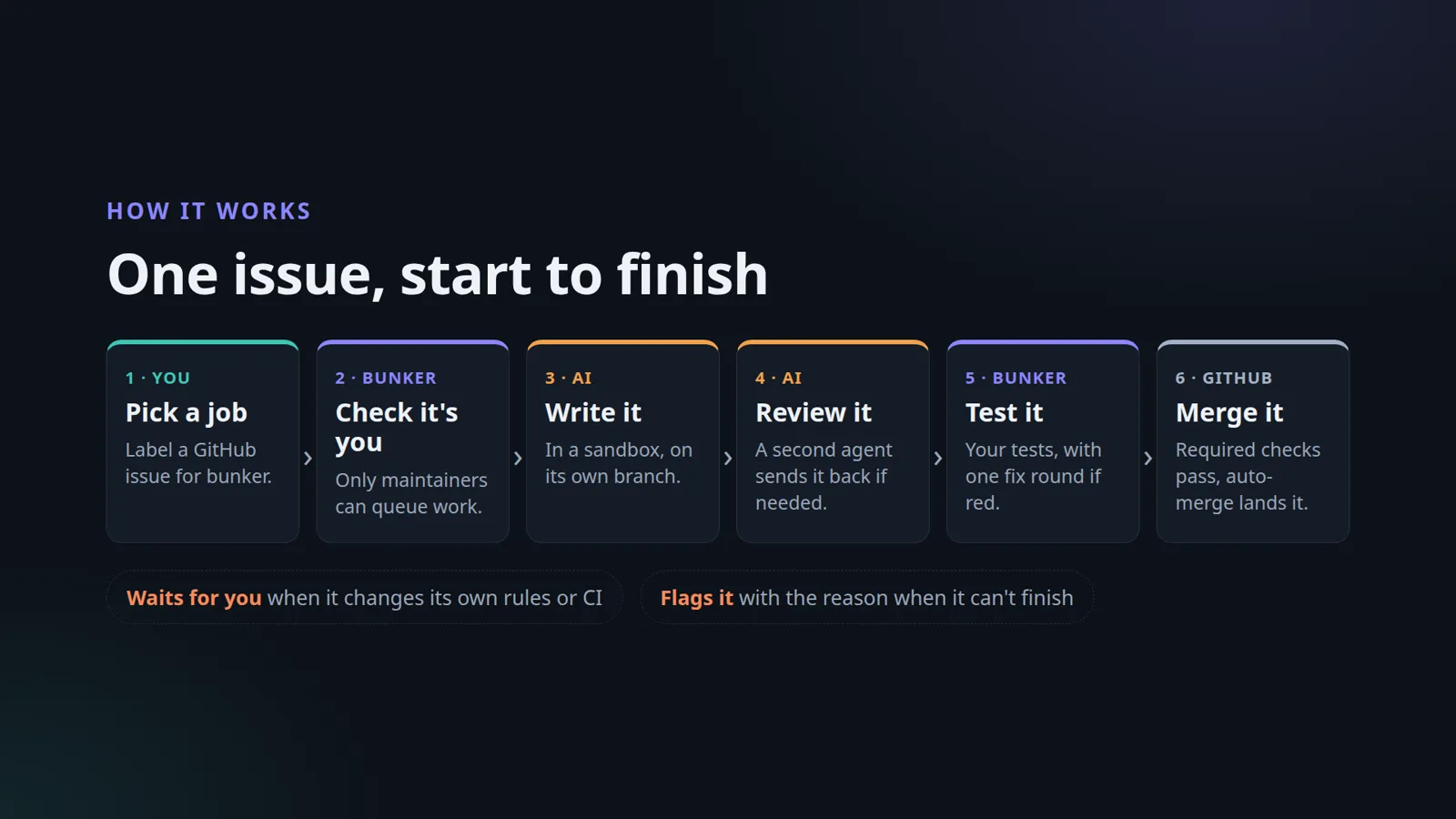
You choose the work
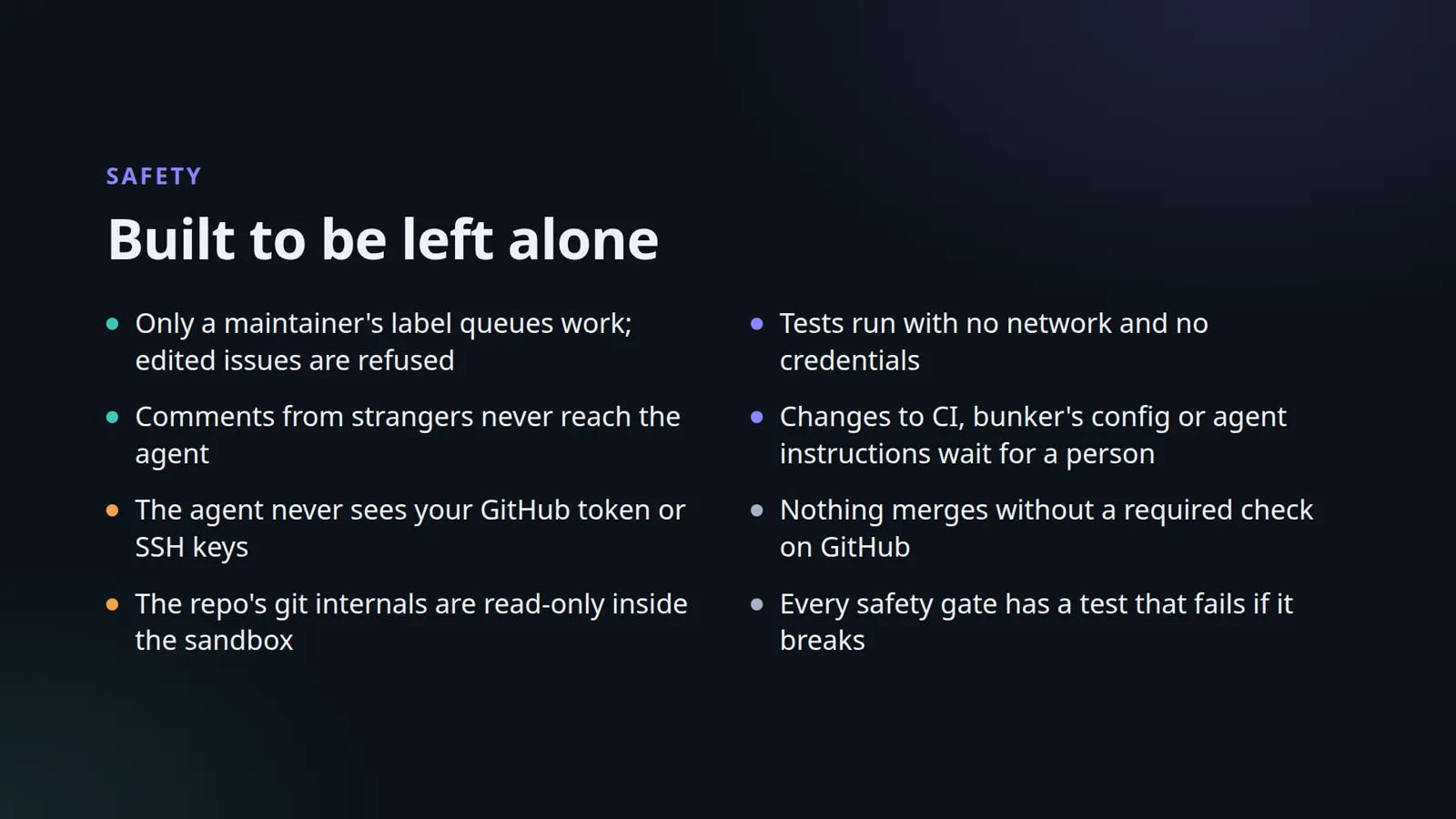
Label an issue bunker:queued. Only repo admins and maintainers can queue work, and bunker checks who added the label.
Claude coding agents work your GitHub issues in locked-down sandboxes, a second agent reviews, your tests decide, and GitHub's required checks guard the merge.

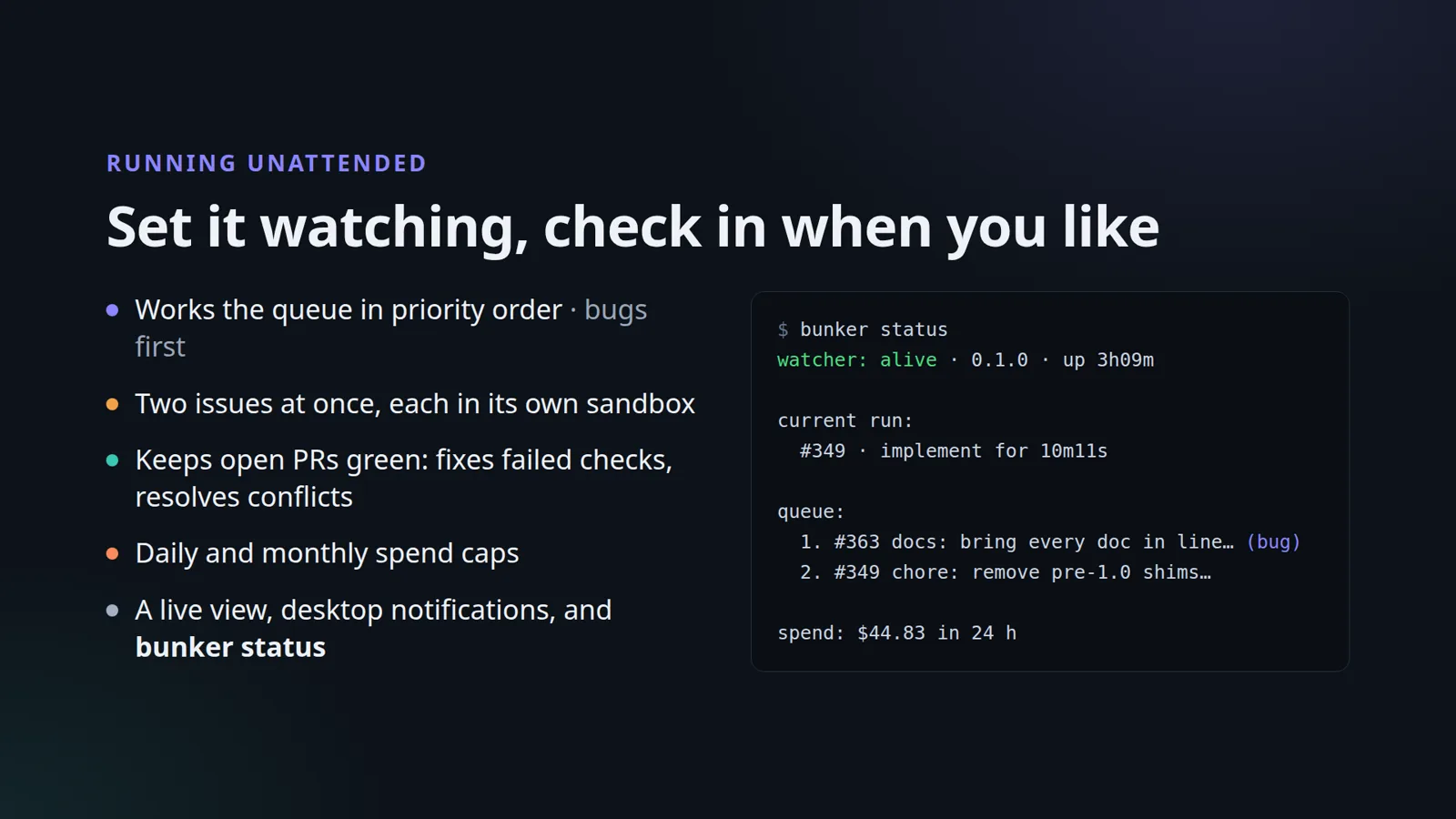
bunker status shows what it did and why.Not for you if: your repo has no tests or CI to gate on, the work is a big redesign rather than issues you could describe in a few lines, or you don't want to read the PRs it opens.
curl -fsSL https://raw.githubusercontent.com/dbggr/bunker/main/install.sh | shThe installer checks git, Bun, Docker, the GitHub CLI and Claude Code first, and never installs them for you; it links each missing one's install page.
cd your-repo
bunker init          # tokens, setup and verify commands, sandbox image, labels
bunker doctor        # every ✓ and ✗, with the fix for each ✗
bunker issue 12      # one issue, start to finish, and watch it work
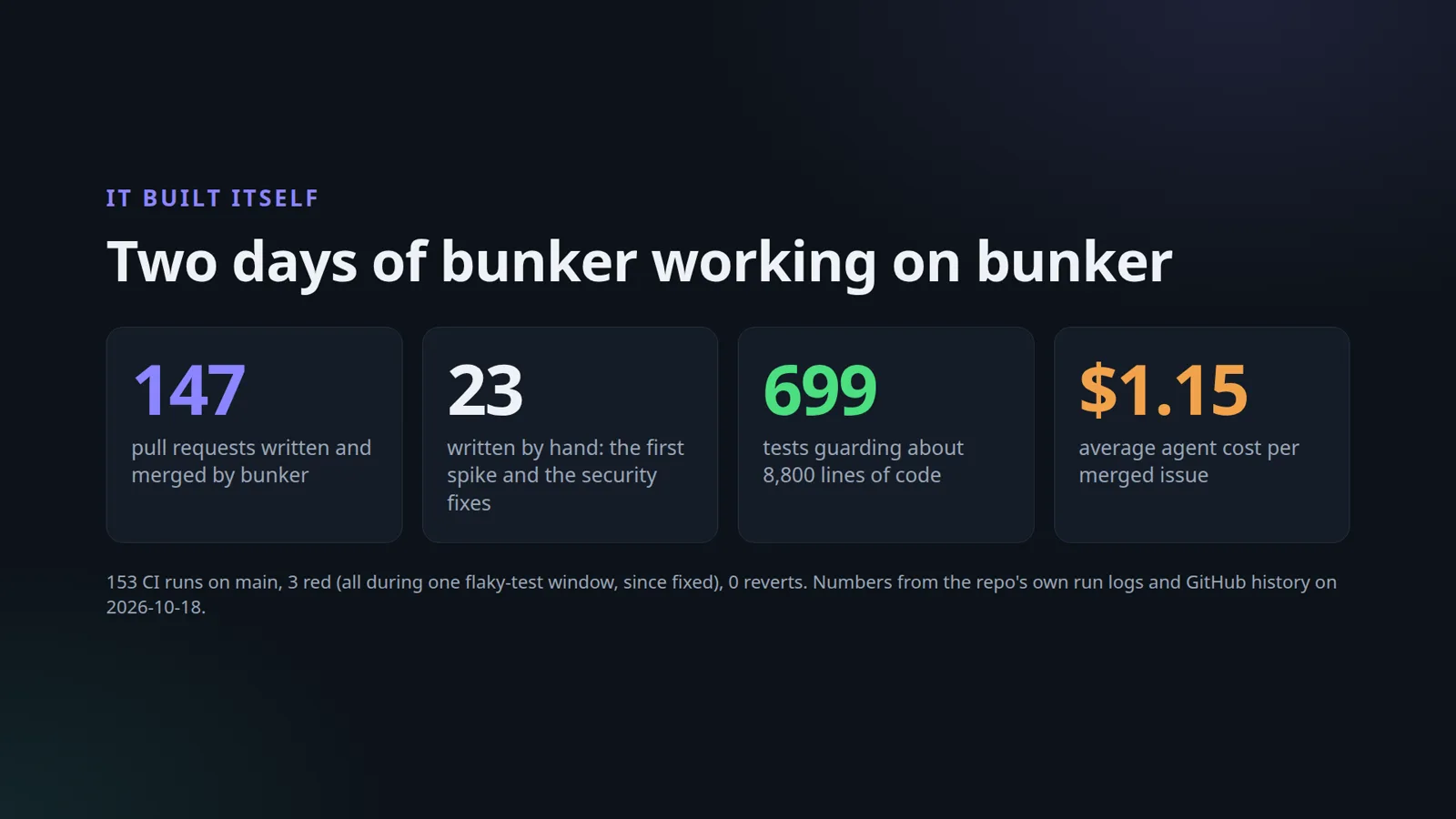
bunker watch # then work everything labelled bunker:queued, unattendedIn its first two days bunker wrote and merged 147 of its own pull requests (23 more were written by hand), with about 700 tests and no reverts on main, at roughly $1.15 of agent time per merged issue. The numbers and the failures are in the v1.0 readiness review.
Pre-1.0
bunker works its own repository every day, but flags, config keys and labels can still change before 1.0.
bunker was inspired by Matt Pocock's sandcastle, a toolkit for building agent loops. bunker is one opinionated loop, from issue to merged PR, with the queue, review, merge and unattended safety built in.